

Types of 3D Metal Printing Techniques
The technique you use to 3D-print a metallic object will depend on your project’s scale, geometry, and required physical properties. Some common ones include the following:
1. Powder Bed Fusion
In this 3D printing technique, the printing machine spreads a layer of metal powder over a build plate and uses a high-powered laser to scan and melt the powder selectively to build the object. The build platform is then lowered, and another metal powder layer is deposited so the laser can melt and fuse the next layer of the object.
The printer repeats the process and keeps building layers until the object is complete.
This technique is commonly divided into two others: Selective Laser Melting (SLM) and Direct Metal Laser Sintering (DMLS).
SLM fully melts the metal powder as it uses pure metals with one melting point. In contrast, DMLS uses alloys of different materials, so it can not melt them at one temperature. Instead, it fuses all those materials with varying melting points at a molecular level. SLM uses higher-powered lasers than DMLS, so the resulting objects require more finishing.
Given the control you have over the layers in the powder bed fusion process, you can use it to create high-quality, detailed parts with complex geometries. This technique can create turbine parts, rocket engine components, implants like prosthetic limbs, engine components, jewelry, and artwork.
2. Binder Jetting
This process utilizes an adhesive fluid to assemble metal powder in the required shape. The 3D printer does so by layering alternating layers of powder and the binding material. Once the desired object is formed, the jetting machine removes the excess powder and sinters the object in a furnace to fuse the metal particles.
The binder jetting process is relatively simple and cost-effective, so you can use it to create complex parts. You can also easily use it to produce relatively larger objects, like architectural components. Objects that can be 3D printed this way include aircraft fuselage sections, engine components, bone scaffolds and tissue engineering scaffolds, and circuit boards.
3. Directed Energy Deposition
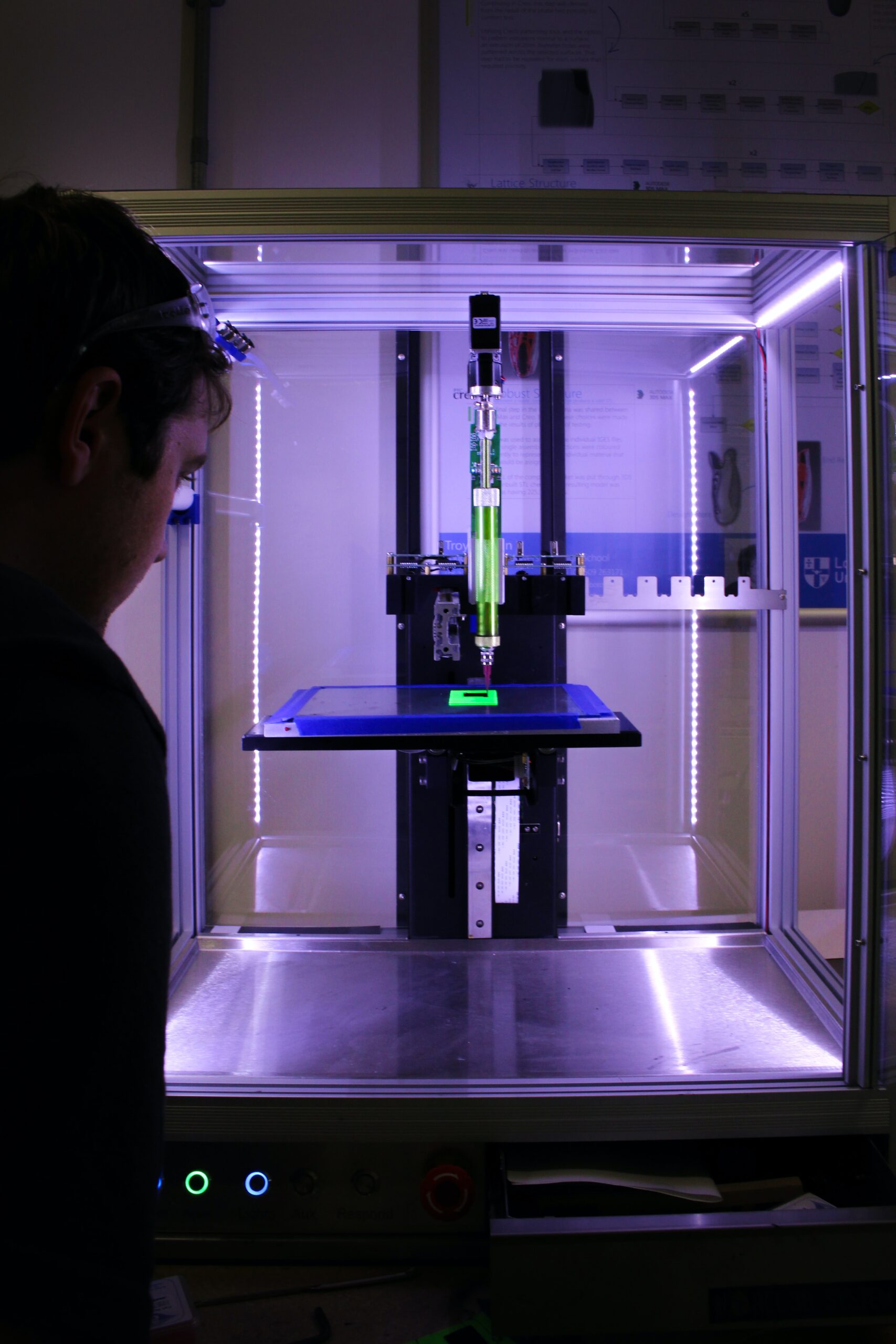
Directed energy deposition essentially deposits molten metal layers to create an object. The process uses a high-powered laser or electron beam that’s used to melt metal powder or wire and deposit it on a pre-prepared substrate (often, a metal plate). It then deposits the metal in layers until the desired 3D shape is created.
The process is versatile, allows for complex creations, and creates parts with excellent mechanical properties. Industrially, you can use it to create high-strength aircraft and spacecraft parts, complex and customized automotive components for regular and military vehicles, power-generation equipment, etc.
4. Laminated Object Manufacturing
LOM is a type of sheet lamination process that can be used to create metallic 3D objects. Note that sheet manufacturing otherwise uses plastics or paper.
In Laminated Object Manufacturing using metals, the object is initially sliced into layers that are printed on separate sheets of metal foil. A layer of binder is deposited on each sheet beforehand, after which they’re sliced with a laser or another appropriate cutting tool.
They’re stacked on top of each other, and pressure is used to bind them together. You’ll have to mechanically improve the resulting object’s surface and finish. Techniques like buffing and sanding can help.
Objects printed through Laminated Object Manufacturing are ideal for prototyping, packaging, mock-ups, etc., and can be used in large-scale projects due to their low cost. You can use them in artistic or educational settings as well.
5. Ultrasonic Additive Manufacturing
This 3D printing process is also conducted by stacking sheets of metal. However, once you stack the foil layers, they’re exposed to ultrasonic vibrations in UAM instead of pressure. This causes the metal foils to deform and bond at an atomic level, creating strong and durable 3D metal objects with low density.
You have to finish the process by trimming excess material and polishing or coating the surface.
The objects manufactured through UAM are lightweight yet strong, finding their uses in aircraft components, biomedical implants like hip replacements, electronic devices, engine components, suspension parts, etc.
