
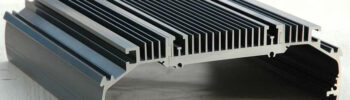


A heat sink is used in electronic devices to dissipate heat and prevent overheating. It is typically made of a metal such as aluminum or copper. It absorbs and transfers heat from the device’s central processing unit (CPU) or other heat-generating components. Heat sinks work by increasing the surface area available for heat transfer and using fins or other structures to increase the flow of air or other cooling medium over the surface of the heat sink. This helps to keep the device operating at a safe temperature and prevent damage from overheating.
In many applications, the device is an electronic component (e.g. CPU, GPU, ASIC, FET etc.) and the surrounding fluid is air. The device transfers heat to the heatsink by conduction. The primary mechanism of heat transfer from the heatsink is convection, although radiation also has a minor influence.
There are two distinct types of convection:
- Natural convection – where the movement of the fluid particles is caused by the local changes in density due to transfer of heat from the surface of a solid to the fluid particles in close proximity.
- Forced convection – where the movement of the fluid particles is caused by an additional device such as a fan or blower.
Heatsinks are designed to significantly increase the contact surface area between solid and fluid, thereby increasing the opportunity for heat transfer. A typical ASIC may have a surface area in contact with air of only 1600mm2. The surface area of a typical heatsink used to cool that device may be 10 or 20 times that value.
HOW DOES A HEATSINK WORK?
When electronic components operate, they generate heat due to the flow of electricity through them. This heat must be dissipated to prevent the parts from overheating and failing. A heat sink works by absorbing this heat and spreading it out over a larger surface area, allowing it to dissipate more efficiently.
The heat sink is typically attached to the electronic component using a thermal interface material, such as a thermal paste or pad. This material helps to transfer the heat from the component to the heat sink.
Once the heat is transferred to the heatsink, it dissipates into the surrounding air through convection. The larger the surface area of the heat sink, the more efficient it is at dissipating heat.
Adequate cooling is essential for electronic devices, and heatsinks are an important component of any cooling solution. At Radian Thermal Products, inc., we are proud to be one of the leading heatsink suppliers in the industry, offering a wide range of high-quality products and exceptional customer service. Contact us today to learn how we can help meet your cooling needs.
HEATSINK CONSTRUCTION
There are many designs for heatsinks, but they typically comprise a base and a number of protrusions attached to this base. The base is the feature that interfaces with the device to be cooled. Heat is conducted through the base into the protrusions. The protrusions can take several forms, including:
